
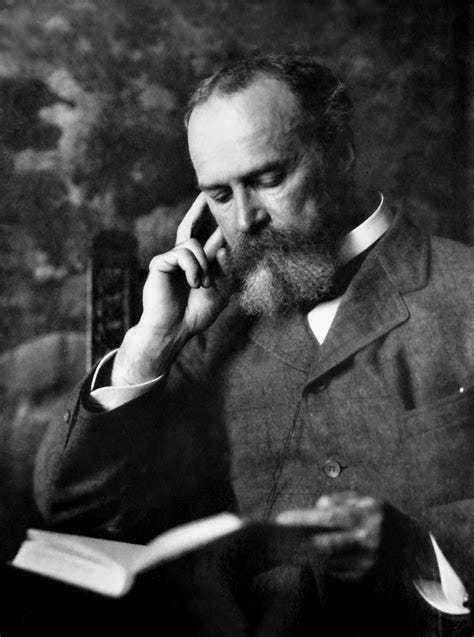
“No American has matched William James in the breadth and depth of his psychological studies. He possessed an exquisite and rare modestly, civility, and generosity […] and is still waiting to inform his readers, his moral intelligence a guide that can help us look around, look within, look ahead.” — Robert Coles
the early life of william james
William James (1942-1910) was born in New York City and grew into the most widely read American philosopher of the twentieth century. He is celebrated by many as the greatest psychologist the nation ever produced.
His early life was defined by restless mobility. Raised alongside his brother, the famed novelist Henry James, his formal education spanned England, France, Germany, Italy, Switzerland, and the United States. As a Harvard medical student, he studied anatomy and physiology under the noted naturalist Louis Agassiz, earning his medical degree in 1869. Yet behind his intellectual pursuits lay severe bouts of depression and suicidal ideation. Out of sheer survival, James began constructing a personal philosophy of life—a crisis-born impulse that soon evolved into a rigorous study of psychology and the dynamic play between experience, thought, and conduct.
In 1875, James taught his first psychology course at Harvard, establishing the university as the first in the United States to offer instruction in the new experimental psychology. Remarkably, James had never taken a formal class in the discipline; the first psychology lecture he ever attended was the one he delivered himself.
By 1878, James had married and embarked on writing The Principles of Psychology—a monumental undertaking that would span a decade. His academic rise at Harvard was swift: appointed assistant professor of philosophy in 1880, full professor in 1885, and professor of psychology in 1889. When Principles was finally published in 1890, James immediately arranged for Hugo Münsterberg to take over his laboratory responsibilities and direct the Harvard laboratory. Eager to step away from bench research, James handed off his teaching duties as well, returning full force to philosophical inquiries.
The final two decades of his life were dedicated to refining his philosophical system, though his writing continued to bridge the two disciplines. In 1899, he published Talks to Teachers, applying psychological insights directly to classroom learning. His seminal work The Varieties of Religious Experience followed in 1902. James retired from Harvard in 1907—the same year he published Pragmatism—followed by two additional philosophical works in 1909. Though plagued by chronic ill health and recurrent depression throughout his life, he wrote tirelessly until his death from a heart condition in 1910.
“Seek out that particular mental attribute which makes you feel most deeply and vitally alive, along with which comes the inner voice which says, ‘This is the real me,’ and when you have found that attitude, follow it.”
William James, The Principles of Psychology
theoretical contributions
James’s foundational contribution to psychology was functionalism, articulated masterfully throughout The Principles of Psychology. Moving away from dissecting the static elements of the mind, functionalism asserted that psychology must study living individuals adapting to their environments. Consciousness, James argued, was not an ornamental trait but an essential adaptational tool designed to guide human actions toward survival.
Beyond function, James emphasized the nonrational dimensions of human nature. While acknowledging human rationality, he observed that people are driven by passions, desires, and active impulses that frequently lead to irrational choices. Human wants and needs shape reason and concept formation, proving that intellect does not operate in a vacuum.
His vision was further distinguished by key theoretical innovations:
The Stream of Consciousness: Rejecting the idea that mental life could be broken into isolated fragments, James viewed mind as an ever-changing, unified flow—coining the phrase “stream of consciousness” to capture its continuous motion.
Physiological Theory of Emotion: Inverting the intuitive belief that mental feeling triggers bodily reactions, James proposed that physical arousal precedes emotional experience—particularly for primary emotions like fear, rage, grief, and love.
The Architecture of Habit: James highlighted the profound role of habit in shaping behavior, grounding it directly in the mechanics of the nervous system. Repeated actions carve neural pathways, making subsequent behaviors effortless and freeing conscious attention for new tasks.
Wherever you are, it is your friends
William James
who make your world.
influence on the development of psychology
As a philosopher, James—alongside Charles S. Peirce and John Dewey—pioneered pragmatism, the doctrine that the truth or validity of any idea rests entirely on its practical consequences. His philosophical reputation remains every bit as formidable as his legacy in psychology.
Within psychology proper, The Principles transformed the landscape. By steering the young discipline away from Wundt and Titchener’s rigid structuralism, James paved the way for functionalism to take root as a formal school of thought. This paradigm shift dramatically broadened the scope of the field:
It invited research into areas previously ignored by structuralists, including animal behavior, child development, and mental impairment.
It validated a rich blend of methodologies—combining introspective observation (which James championed in theory) with empirical laboratory testing, physiological studies, mental tests, and survey questionnaires.
Ultimately, James helped reorient modern psychology from an abstract science of mental architecture into an applied, human-centered discipline focused on the practical problems of daily life.

Houghton Library, Harvard University, MS Am 1092.2 (54)
endnotes
Coles, Robert. Introduction. Selected Writings, by William James. Book-of-the-Month Club, 1997.
Dolnick, Ben. For a delightful reflection on finding yourself stuck as a plus-one at an “endless awards dinner in a hotel ballroom”—only to realize “this one guy next to you” is American philosopher and psychologist William James—read Ben Dolnick’s piece, “William James, The Principles of Psychology.” Substack,
22 Dec 2021.
Mower, Allyson. Around 1867 when he was 25 years old, William James experienced prolonged depression, severe anxiety and panic attacks, and psychological collapse with suicidal ideation. This personal descent shaped his landmark work in psychology and philosophy, including the excerpts shared by Allyson Mower in “From The Principles of Psychology, and Is Life Worth Living?“
The Ethics of Suicide Digital Archive. 26 May 2015.
more from the third eve
- The Architecture of the Mind: The Evolution of Psychology, an Introduction
- René Descartes, Part 1
- René Descartes, Part 2
- James McKeen Cattell
- William James ◀ You are here.

Leave a Reply