
Psychology evolved through a series of foundational frameworks, each offering a distinct lens on human behavior, cognition and development. This essay provides essential background and historical evolution to conceptual models underpinning modern psychological thought and treatment.
the evolution of psychological thought
To understand human development from infancy through that of the mature mind, one must first understand the foundational frameworks that attempted to map human consciousness. Psychology did not emerge as a single unified discipline; rather, it evolved through a series of shifts, debates, and paradigm expansions. Each school of thought offered a distinct lens through which to view human behavior, cognition, and experience—shaping how we view the arc of the human lifespan.

historical foundations
The birth of psychology as an independent empirical discipline in the late nineteenth century was defined by an inquiry into the nature of conscious experience. Three schools of thought were foundational to the framework or history of psychology: Structuralism, Functionalism, and Gestalt Psychology.
Structuralism (1879-1890s) was grounded in early experimental laboratories and sought to isolate the fundamental elements of human consciousness–sensations, perceptions, and affective states–much like a periodic table of the mind. Its primary methodology was trained introspection, a systematic analysis of one’s own immediate conscious states.
Structuralism mapped the static architecture of the baseline adult mind laying the ground work for experimental methodology, though it gave little attention to ongoing individual development or chronological change. Key thinkers were Wilhelm Wundt and Edward B. Titchener.
Functionalism (1890s) emerged largely in America as a reaction to Structuralism, shifting the core question from what the mind is composed of to how and why the mind functions. Deeply influenced by evolutionary theory, Functionalism examined mental processes as practical tools for continuous adaptation to environmental demands.
By framing mental life as an adaptive, fluid process, Functionalism established the foundation for developmental psychology, viewing adulthood and aging through the lens of ongoing adaptation over time. William James and John Dewey were major Functionalism theorists.
Gestalt Psychology (1912) resisted structural reductionism, asserting that perception cannot be understood by merely decomposing it into individual sensory inputs. Instead, the mind organizes information into unified wholes–“the whole is greater than the sum of its parts.”
Gestalt principles, developed in Europe alongside Freud’s Psychoanalytic Psychology. Gestalt informed cognitive models of pattern recognition, problem-solving, and the integration of complex experience–processes central to the development of wisdom and mature synthesis in midlife and beyond. Its central figures included Max Wertheimer, Wolfgang Köhler, and Kurt Koffka.
The mind perceives whole patterns rather than a simple sum of individual parts—the whole is greater than the sum of its parts.
the third eve
PSYCHODYNAMIC PARADIGMS
While early laboratory experimentalists focused on conscious sensation and adaptation, psychodynamic theorists turned inward to explore the forces beneath conscious awareness.
Classical Psychoanalytic Psychology (1896-1900) prioritized unconscious drives, defense mechanisms, and early childhood psychosexual formation. The father of classical psychoanalysis was Sigmund Freud, who first used the term “psychoanalysis” in The Interpretation of Dreams. The focus of Psychoanalytic psychology is the influence of the unconscious mind, early childhood experiences, biological drives, and behavioral defense mechanisms.
Developmental psychoanalyst Erik Erikson broadened this paradigm across the full lifespan, proposing eight distinct psychosocial stages defined by core conflicts (e.g., Generativity vs. Stagnation in middle adulthood, and Integrity vs. Despair in late adulthood). Erikson thus established adult development as a distinct, ongoing psychological journey rather than a static endpoint reached at maturity.
Analytic Psychology (1912-1913) departed from classical psychoanalysis by introducing a broader architecture of the psyche. Its central figure, Carl Gustav Jung, posited that the psyche includes not only a personal unconscious, but also a collective unconscious–a structural layer of inherited human experience populated by archetypes (universal patterns, themes, and motifs).
Individuation & the Second Half of Life. Central to Jungian theory is the process of individuation—the lifelong journey toward self-realization and psychological wholeness through the integration of conscious and unconscious elements (including the Shadow, Anima/Animus, and the Self). Unlike frameworks that view adulthood through physical decline or social role performance, Jung regarded the second half of life as a period of profound interior reorganization, shifting focus from external social acquisition toward inner meaning, symbolic integration, and spiritual maturity. Analytic Psychology, or Depth Psychology, is often underrepresented or simplified in psychology texts.
Jung regarded the second half of life as a period of profound interior reorganization, shifting focus from external social acquisition toward inner meaning and symbolic integration.
The Third Eve
behavioral, humanistic, & cognitive paradigms
Behaviorism (1913) rejected unobservable mental states, insisting that psychology remain an objective science focused exclusively on observable behavior conditioned through environmental stimuli, associations, and reinforcement schedules. Behaviorism illustrates how routines, coping mechanisms, and behavioral patterns solidify or adapt in older adulthood through environmental reinforcers and habit formation. Key thinkers in Behaviorism include John B. Watson, B. F. Skinner, and Ivan Pavlov.
Biological & Evolutionary Psychology (1949) investigates the physical grounds of human behavior—exploring genetic inheritance, neural networks, neurochemistry, and evolutionary adaptations. Proponents of this view hold that mapping these biological underpinnings is essential for understanding neuroplasticity, brain health, age-related neurological change, and the physical roots of cognitive resilience. Key figures include Donald Hebb, David Buss, and Robert Plomin.
Humanistic Psychology (1950s) arose as the “Third Force” in psychology, rejecting both deterministic psychoanalysis and mechanistic behaviorism. It emphasized conscious choice, personal agency, free will, and the innate human drive toward self-actualization.
Intellectual leaders such as Carl Rogers and Abraham Maslow remapped aging away from a story of inevitable decline toward an ongoing opportunity for personal expansion, creative fulfillment, and psychological autonomy.
Cognitive Psychology (1956-1967) has as its core concept a “Cognitive Revolution” that restored mental processes to center stage, conceptualizing the mind as an active information-processing system involved in memory, problem-solving, decision-making, and executive function.
Cognitive models developed by pivotal voices such as Jean Piaget, Ulric Neisser, and Albert Bandura provided key distinctions for understanding adult aging, notably differentiating between fluid intelligence (processing speed, novel problem solving, and working memory, which tend to decline with age) and crystallized intelligence (accumulated knowledge, vocabulary, and experiential wisdom, which often increase or remain stable across adulthood).
overview summary
| School of Thought | Primary Focus | Key Method | Lifespan Perspective |
|---|---|---|---|
| Structuralism (1879-1890s) | Elements of consciousness | Systematic introspection | Baseline for adult conscious experience |
| Functionalism (1890s) | Adaptive purpose of mind | Observation of functional adaptation | Foundational view of developmental adaptation |
| Psychoanalytic (1896-1900) | Unconscious drives & social development | Psychoanalysis & psychosocial stage theory | Childhood focus, personal unconscious, adult development |
| Gestalt (1912) | Pattern perception & wholes | Perceptual grouping & synthesis | Holistic pattern recognition and mature synthesis |
| Analytic Psychology (1912-1913) | Archetypes, the Collective Unconscious, Individuation | Archetypal analysis & symbolic integration | Depth psychology focus on second half of life, inner wholeness |
| Behaviorism (1913) | Observable behavior | Classical & operant conditioning | Environmental reinforcement & habit maintenance |
| Biological (1949) | Brain, genetics & physiology | Neuroimaging & physiological measurement | Neuroplasticity, brain aging, & cognitive resilience |
| Humanistic (1950s) | Personal growth & agency | Self-actualization, person-centered inquiry | Continued personal fulfillment in late adulthood |
| Cognitive (1956-1967) | Information processing | Empirical memory & task performance | Fluid v. crystallized intelligence |

endnotes
Erikson, E. H. (1950). Childhood and Society. W. W. Norton & Company.
Freud, S. (1923). The Ego and the Id. The Hogarth Press.
James, W. (1890). The Principles of Psychology. Henry Holt and Company.
Jung, C. G. (1933). Modern Man in Search of a Soul. Kegan Paul, Trench, Trubner & Co.
Jung, C. G. (1969). The Structure and Dynamics of the Psyche (Collected Works, Vol. 8). Princeton University Press.
Koffka, K. (1935). Principles of Gestalt Psychology. Harcourt, Brace & World.
Maslow, A. H. (1954). Motivation and Personality. Harper & Row.
Neisser, U. (1967). Cognitive Psychology. Appleton-Century-Crofts.
Rogers, C. R. (1961). On Becoming a Person. Houghton Mifflin.
Skinner, B. F. (1953). Science and Human Behavior. Macmillan.
Watson, J. B. (1913). Psychology as the behaviorist views it. Psychological Review, 20(2), 158–177.
Wundt, W. (1897). Outlines of Psychology. Wilhelm Engelmann.
more from the third eve
- The Architecture of the Mind: A brief history of psychology.
- Structuralism: What is the mind made of?
- Functionalism, Part 1: The development of applied psychology.
- Functionalism, Part 2: Why non-interventionism failed.
featured art
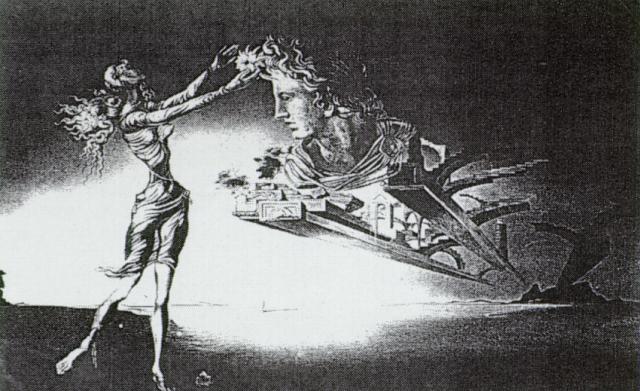
salvador dali,
“apparition of a woman and suspended architecture in the desert,” 1946

Leave a Reply