Sacred, complex, and emotionally powerful, the Mother Archetype is the most influential pattern in the collective unconscious.1 Consequently, relationships with mothers often feel fraught.
With my last essay, I launched a new series called “The Mother” as a basis for exploring this archetype, which is a universal pattern and innate prototype for human experiences and behaviors.
Archetypes manifest across cultures and epochs through myths, rituals, art, dreams, and everyday behaviors. Although cultures adapt these universal themes to fit their context, they retain their core essence, reflecting the commonalities in human experiences and psychological processes. 2
As noted, various cultures and periods have depicted the Mother Archetype in different forms:
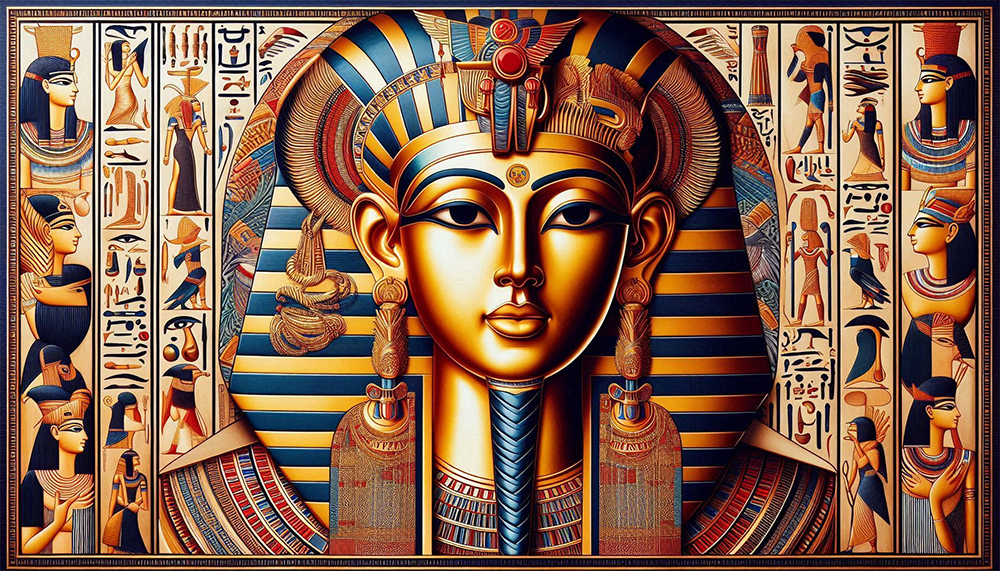
- Isis, the ancient Egyptian goddess, nurturing and protective. A devoted wife and mother, Isis used her magical abilities to protect her son, Horus.
- The Virgin Mary, the Christian representation of the divine and nurturing mother, revered for her purity, compassion, and maternal care.
- Earth Mother or Corn Mother figures in Native American cultures symbolizing fertility, nourishment, and the source of life.
- Demeter, the Greek goddess of the harvest and fertility. Her grief over the abduction of her daughter, Persephone, by Hades caused the earth itself to become barren, reflecting the deep bond between Mother and Child.
- Parvati, the consort of Shiva and mother of Ganesha and Kartikeya, associated with the creative force in the universe, nurturing motherhood, devotion, and strength.
- Gaia & Pachamama, Greek and Andean earth goddesses revered as providers and nurturers.
- Molly Weasley, of Harry Potter fame, a modern epitome of a loving, protective mother, fiercely defending her children and caring for Harry as if he were her own.
- Sara Conner, of The Terminator series, embodied the protective and sacrificial aspects of the Mother archetype by dedicating her life to protecting her son, John, the future savior of humanity.

the personal mother
In addition to the effects of the archetypal Mother, each of us is likewise affected by the presence (or absence) of our personal mother, and by disruptions in the mother-child bond. The influence of one’s personal mother can hardly be overstated. Her foundational role in early development and formation of the psyche are profound. For that reason, she is the first and perhaps the most influential figure in your life.
- Prenatal Environment. The mother’s physical and emotional state affect the developing fetus. Studies in prenatal psychology suggest that the fetus is influenced by the mother’s stress levels, nutrition, and overall well-being.3
- Infancy. The bond formed between mother and infant is crucial for the child’s survival and emotional development. When Mother is reliably present, she provides nourishment, safety, and comfort, forming the basis of the infant’s first experiences of the world. However, if Mother is absent or inconsistent, these essential needs may go unmet, impacting the child’s development and sense of security.
- Attachment. Developed by John Bowlby and expanded by Mary Ainsworth, Attachment Theory highlights the importance of the mother-child bond in early childhood. Secure attachment, where the mother is responsive and available, leads to healthy emotional and social development. Insecure attachment can result from neglect or inconsistency, impacting the child’s future relationships and emotional health.
- Developmental Influence. During early childhood, the mother’s behavior and relationship with the child are internalized, forming the basis for the child’s self-concept and expectations of others. This internal representation influences how the child interacts with the world.
- Role Models. The Mother often serves as a primary role model. Her values, behaviors, and attitudes shape the child’s development of gender roles, moral values, and social behaviors.
- Same-sex couples are not exempt from the influence of the Mother Archetype. Theorists in modern psychology agree that parental androgyny, integrating masculine and feminine traits, likely benefits a child’s development. This applies to children raised by same-sex couples or co-parents emphasizing personal development over labels.4
- In adulthood, the internalized Mother influences self-care practices and how we nurture others and form relationships. When individuals become parents, the Mother Archetype resurfaces. When they become parents, they draw on their own experiences and internalized images of their mothers to guide their parenting.
lifelong archetypal influence
The Mother Archetype persists throughout life as a symbol of nurturing, care, and protection. Even without biological or nurturing influence, people seek mother figures in mentors, teachers, therapists, or spiritual guides for support.
The Mother archetype is also deeply embedded in collective cultural narratives, myths, and religious traditions, continuously exerting their influence. Cultural representations of motherhood shape societal expectations and individual perceptions of the maternal role.
As a result, perceptions of ‘mother’ may diverge from her true character, shaped by archetypes, culture, individual temperament, and their mother’s true influence.
the mother in psychotherapy
The Mother Archetype can—and ought to be—explored to understand a person’s relationship to their personal mother and other maternal figures, as well as their inner capacity for self-care and nurturing. Positive and negative experiences with maternal figures have profound influences on a person’s psychological development.
Without an honest exploration of the relationship to one’s personal mother, to our cultural representations of Mother, and to the Mother Archetype, we are bound to project our own unconscious, unrecognized, and unwelcomed shadowy psychic elements onto others. We make unconscious, repeated attempts to get them to heal our mother wound, or to punish them for aggravating it, nearly always with damaging and even disastrous results. Of course, just as Mother disappointed us, the person receiving projections–whether positive or negative–is unlikely to meet our expectations, further exacerbating the wound.
As I wrote last week:
People who were wounded in their early relationships with their mothers often develop emotional and behavioral patterns that can negatively impact their current relationships, behaviors, and beliefs about others—particularly about feminine figures. The Mother Archetype and one’s personal mother have tremendous nurturing and destructive potentials.

sacred mother
Earlier this year, my daughter Sage shared a beautiful video with me that is well worth watching—an enlightened mother-daughter discussion of the mother wound. Most remarkable to us was the focus on the parallel relationships one has to the internal versus the external mother.
If I were still working with clients dealing with a mother wound, I would invite them to watch this video and return to discuss its concepts in a later session. I share it with you in the same hope—namely, that you’ll take the time to watch how a loving, connected mother and daughter discuss the “mother wound” and provide a living example for us.
Here are paraphrases of the salient points of their discussion:
It’s fascinating that, as a female embryo, you already have all the eggs you’ll ever have. So, when I was in my mother’s womb, my daughter was there, too. The mother’s experiences affect both the embryo and the eggs within it. These connections, though unseen and unknown, are tangible and present in our bodies and experiences.
[…] To unpack your relationship with your mother, recognize that she exists within you as the mother you internalized at various ages. She is not the person sitting in front of you now.
We’re born with an innocent wish to be celebrated, supported, and nourished by our mothers. Often, our childhood experiences fall short, leading to disappointment. This inability to reconcile unmet needs and hurt forms the essence of the mother wound.
As much as it’s tempting and sometimes necessary to name what you didn’t get, or to voice to your mother where you were hurt, there is also wisdom in realizing that this is work you can do on your own. It’s not necessarily connected to your current relationship with your mother. The more you engage in this work, the more it will inform your relationships in the present moment, allowing you to be more present in the here-and-now and less triggered by unresolved hurt.5
Joy Ben Hur & her Mother, in
“Discussing the Mother Wound with My Mother“
paths to healing
Even if your mother has passed away, or you are otherwise separated or estranged, and cannot have healing conversations with her, you can still do this work independently or with an experienced psychotherapist.
In upcoming essays, I’ll explore how archetypes and culture shape our relationships with our mothers, the challenges of transference and countertransference, and ways to heal the mother wound.

footnotes
- According to Carl Jung, the founder of analytical psychology, the collective unconscious is a reservoir of shared experiences, symbols, and archetypes inherited and universally present in all individuals. ↩︎
- Examples of other primary archetypes include The Child, The Shadow, The Hero, The Father. ↩︎
- Pre- and perinatal psychology is a scientific field that studies the psychological and physiological effects of a person’s earliest experiences, from before birth to the first year of the baby’s life. This includes conception, pregnancy, labor, delivery, and the postpartum period, as well as the intellectual and emotional development of the unborn and newborn child. ↩︎
- Unlike Freud and many post-Freudian psychoanalysts, Jung and analytical psychology in general haven’t adopted an attitude toward being gay (or LGBTQ+) as a pathology. Rather, when he did write about treating a patients who were gay men, he treated it as another aspect of being human and living in a cultural reality. Jung wrote about being gay in the context of a consistent presence of diverse sexual orientations throughout time and place. In Jungian thought, the most psychologically sound person is the person who is, in effect, androgynous and can utilize what are classically termed as “Masculine” or “Feminine” traits aising from universal, historic and cultural representations and archetypal images that convey certain traits. ↩︎
- Ben Hur, Joy. “Discussing the Mother Wound with My Mother.” YouTube, 3 Mar 2024. Watch more at http://www.youtube.com/@Joyish ↩︎
for further reading
Association for Prenatal and Perinatal Psychology and Health (APPPAH).
Stavraki, Ioanna. “What is Transference in Psychology?” Simply Psychology. 24 Jan. 2024.
Verny, Thomas. The Secret Life of the Unborn Child. Dell, 1982.
Wikipedia contributors. “Prenatal and Perinatal Psychology.” Wikipedia, The Free Encyclopedia, 21 Apr. 2024. Web. 12 Jun. 2024.
third eve: essays on the mother
- Sister Mothers, Series Introduction
- Mother as Container, Part 1
- Mother as Container, Part 2
- Mother as Container, Part 3
- Mother as Container, Part 4
- Great Mother
- Beautiful Babes


Leave a Reply