My Mother’s Day greetings last week began early Sunday with a text from my sister-mother, Naomi—whom I also call my co-mom. As birth and adoptive mothers, we were connected through the daughter she birthed and I adopted. Our relationship as sisters in mothering survived the death of our child and has continued through 36 years.
Hearing from Naomi before anyone else on Mother’s Day was a compass pointing directly to Truth’s Due North, making manifest the love that “…is as strong as death.”1 Our mutual regard and love for each other as mothers has persisted through everything.
In my last essay I shared thoughts about our daughter on her birthday. I can’t think of our child without thinking of her first mother, whom I have now known longer than Olivia lived. Our relationship as co-mothers and friends is a departure from what people normally experience in Adoption Land, where secrecy, falsification of records, and protection of adoptive parents are state-sanctioned norms. It deviates, too, from what we collectively and culturally believe it means to be a ‘normal mom.’
happy archetype day
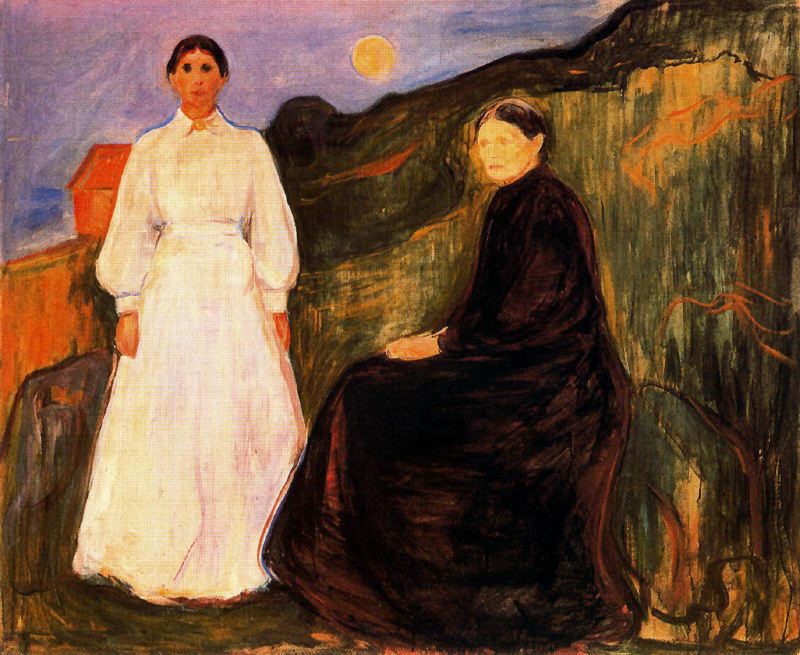
Mother’s Day holidays evoke the powerful archetype of the Mother, associated with qualities of fertility, nurturing, creativity, compassion, and unconditional love. Your personal mother and other early maternal figures influence how you interpret, experience, and relate to universal archetypes of Mother, Grandmother, Stepmother, and Mother-in-Law, and to people who have those roles or labels in your life.
Individuals who were wounded in their early relationships with their mothers commonly develop behavioral and emotional patterns that negatively impact their current relationships, behaviors, and beliefs about others—and particularly about feminine figures. Thus, the Mother Archetype and the personal mother have tremendous nurturing and destructive potentials.
Carl Jung, the father of Analytical Psychology, described the mother-child relationship as the deepest and most poignant one we know. It is no wonder, then, that so many dread and loathe Mother’s Day. It is a holiday of archetypes, and few real people.
“The mother-child relationship is certainly the deepest and most poignant one we know.”
carl jung
mother wound
Although many—if not most—people have archetypally anomalous mother experiences,2 it’s nevertheless quite common to feel uniquely deprived of adequate mothering, an odd duck in a world in which social media and the greeting card racks at the store suggest that everyone else had what we longed for, but didn’t get: A Good Mother. Mother’s Day can be an isolating and painful day as a result.
Although our personal mothers were mere mortals, they were culturally enslaved to collective mandates that they be super-human, too. Even if she was a “good enough” Mom, she nevertheless failed daily to be the Good Mother, the Cookie-Baking Mother, or whatever Mother Archetype her child needed at a given time. These chronic losses have compounded emotional effects on the child.
Healing is harder and requires more work when one grew up with a personal mother who deviated too far from the norm, such as having a character disorder or mental illness, or who was neglectful or abusive. These experiences are known to have long-term harmful effects on the child.
One can see why many of us spend much of our adult lives trying to understand and heal the Mother Wound.
a new series: the mother
With this essay, I’ll begin a series about Mothers:
- The Mother Archetype and its theoretical underpinnings.
- How the archetype influences us collectively and personally.
- Primary Mother Archetypes: Mother, Grandmother, Stepmother, and Mother-in-Law.
- Archetypally Anomalous Mothers 3 and how anomalous mother experiences may hurt and heal.
- What we know about healing a Mother Wound.
- What we know about breaking the cycle of intergenerational trauma.
I began by writing about my daughter’s first mother to honor our shared experience, but also to illustrate how atypical mother experiences are influenced by collective ideas about what’s ‘normal.’ From the perspective of analytical psychology, archetypally anomalous mothers function like fairy tales and myths, in that they cast into sharp relief basic human conflicts, desires, and relationships. I’ll work with the theoretical perspectives of analytical psychology to interpret these experiences, writing also from roles that embody collective, personal, and research-based ideas about the Mother.
I look forward to hearing from readers and subscribers as together we explore “the deepest and most poignant” relationship we know, that with the Mother.4

footnotes
- Song of Solomon 8:6, NASB ↩︎
- I’ve coined the term Archetypally Anomalous Mother to describe archetypal roles outside the ‘big four’ Mother archetypes of Mother, Grandmother, Stepmother, and Mother-in-Law. ↩︎
- Examples of archetypally anomalous mothers include (but aren’t limited to) dead mothers, the original mother in adoption, adoptive and foster mothers, disappointed mothers, women who want to be mothers but aren’t, bereaved mothers, etc. ↩︎
- Jung, Carl G., Author. Collected Works of C. G. Jung, Volume 8: The Structure and Dynamics of the Psyche. Princeton, NJ: Princeton University Press, 2014. Para. 723. ↩︎
third eve: essays on the mother
- Sister Mothers, Series Introduction
- Mother as Container, Part 1
- Mother as Container, Part 2
- Mother as Container, Part 3
- Mother as Container, Part 4
- Great Mother
- Beautiful Babes


Leave a Reply