
Some time ago, I wrote about the death of a family friend in a car accident, recalling a conversation at our dinner table later. One of my daughters asked, “Mom, why didn’t God save her?” I replied that I didn’t know if or how God was involved in car wrecks, but that I’d think about it.
Since then, I’ve thought a great deal about catastrophe and what a person of faith can rely upon in a fallen world. In the past, I’ve felt sure that I can rely on God’s love and care in the worst of circumstances. Having experienced the losses of daughters and husband, I know that I am not immune to tragedy or catastrophe—and neither are my beloveds—simply because I pray or practice faith.
Last night I was reminded of another perspective from many years ago, when my younger brother nearly died in an accident and I grappled with what and how to pray for him. That year, pregnant with my first child, I read Psalm 68:20, which says “God is to us a God of deliverance; and to God the Lord belong escapes from death.” At the time I couldn’t fathom how prayer worked, or why it worked for some and not for others; why some people’s brothers, sisters, mothers, or daughters died, and why others seemed to miraculously escape death. From what the psalmist wrote, though, I’m told that escapes from death belong to the Lord.
After reading this, perhaps when an escape from death does occur, I can breathe a prayer of thanksgiving. When an escape does not occur, I would wonder, as my little girl wondered, “Why didn’t God save her?”

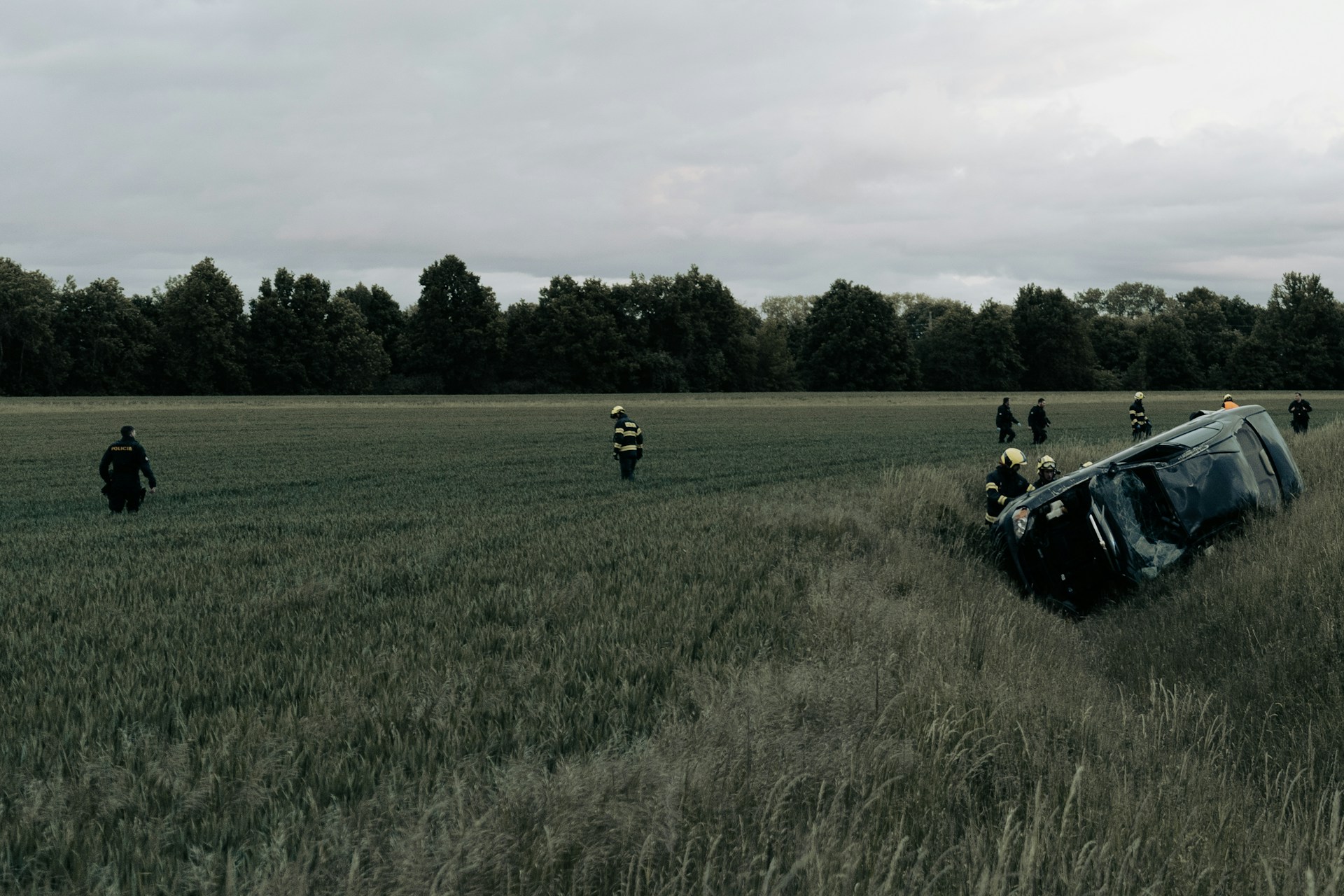
On this day several years ago, I had occasion to remember Psalm 68 when two of my children escaped death in the accident depicted in the photos here. Daughter Fern had gone to pick up her 16-year-old brother, River, from the movie theater around 9:00 p.m. Earlier, as River waited with friends for the film to begin, he sent me a characteristic text, “Oi, mum, I love you more than ice cream.”
Later, as we waited in the ER for both kids to be checked and treated, he observed that his text might have been the last message I’d ever received from him. “I know,” I replied soberly. “I know.”

The next call I received from him was, of course, about the accident. One of the police officers called me after my son did, cautioning me not to “freak out when you see the car; it’s bad.” And it was bad, as you can see for yourselves. There weren’t even six inches of clearance between the roof and the seat where my son had been sitting.
“I knew we were wrecking,” he explained, “and I leaned over and lay down on the seat next to her because I saw the telephone pole coming, and we were rolling.”
The driver’s side fared no better. It was impossible to see how my daughter had survived.
One of the EMSA workers at the scene—the one in the black T-shirt on the right—told me that they work hundreds of wrecks like this and had never seen one so bad without a fatality or critical injury. “If you’re not a churchgoer,” he said, “I hope you go to church and thank God, because this is a miracle.”
Still weak-kneed from the sight of the vehicle, I said, “I do thank God.”

All the way to the emergency room, I felt emotionally and mentally numb. I couldn’t believe what I’d seen. I couldn’t believe that I could have lost one or both of my children last night. I couldn’t believe that I might have been clinging to the last message my son had sent me, “Oi, mum I love you more than ice cream.”
I tried not to imagine burying two more children.
My daughter’s little dog was with them and was thrown from the vehicle. Another daughter took him to the veterinary ER while we went to the human one. The dog was dazed, shocked, and bruised on one side, but he seems to be OK, too. A three-pound Chihuahua had been tossed around inside the vehicle and then thrown onto the side of the road, and even he walked away. How does one account for that, if one wants to?

The day of the accident, I had been working on an essay in my series about Olivia’s illness and death. I sat at the keyboard feeling all the feelings I’d felt the day she died.
Suddenly, blood-curdling screams broke out! I sprang from my chair and rushed downstairs, only to find nine-year-old Juniper screaming bloody murder as two of my boys tried to throw her into the pool. I stomped outside, heart pounding, knees weak at the prospect of some critical injury involving gushing blood or protruding bones, and gave my teenage boys a sound scolding.
“I want a 24-hour reprieve from all adolescent hijinks and shenanigans involving blood-curdling screams and possible emergency room visits, do you hear me?”
“Yes, Mom,” they replied with barely suppressed laughter.
“I mean it, boys! No more traumas for 24 hours!”
In less than five hours I was sitting in the emergency room.
I don’t know why my children escaped death that night and why, somewhere, another mother’s child did not. I don’t know the theology of these things, but I do know that Psalm 119:68 has it right when it says of God, “Thou art good, and Thou doest good.” This was the first Bible verse I taught my children because it speaks to the most foundational questions about God: What is God? What does God do? What is His character?
The God I know is not the author of evil. He is good and full of mercy and lovingkindness. I believe that His energy moves through the world and everything in the world, causing all things to work together for good.
That’s all I know at the moment. And I know that today, as I think of Olivia, I’ll think, too, of how different my life would be right now had my children died in that accident that night.


Leave a Reply