what are archetypes?
Swiss psychiatrist Carl Gustav Jung first proposed the theory of archetypes. Like his mentor, Sigmund Freud, Jung believed that all people possess an unconscious mind containing personal forgotten and repressed contents which Jung called complexes. Unlike Freud, however, Jung believed that the personal unconscious acted as the superficial layer of a much larger and deeper layer of the unconscious “which does not derive from personal experience and is not a personal acquisition but is inborn” (Jung, Archetypes 3). Jung called this deeper layer the collective unconscious, and its contents he called archetypes.
Jung traced the use of the term archetype to Philo Judaeus, who used the term with reference to the Imago Dei (God-image) in man, and to several other classical sources, noting that archetypal contents are transmitted through tribal lore, myth, fairy tales, and esoteric teaching (Jung, Archetypes 4). Archetypal contents are also found in dreams. Jung believed that the existence of typical mythologems in dream contents indicated that myth-forming structural elements must be present in the unconscious psyche and common to all people. The personal archetype functions to express a particular aspect of a person’s psyche; when a collective archetype appears, it often corrects the imbalance of an age. For instance, the recent focus on magic and fantasy in all sorts of fiction indicates that we have suffered for too long with the scientific model and are longing for something transcendent to lend balance.
Archetypal contents are transmitted through tribal lore, myth, fairy tales, and esoteric teaching, and also found in dreams.
complexes
The complexes operate in tandem with archetypes. A complex is a cluster of feeling-toned ideas that accumulate over time around certain universal themes—such as mother, father, power, money, or the orphan. These themes are grounded in archetypal images: the archetype of the mother, the father, the orphan, and so forth. Archetypes are collective patterns—primordial images and motifs—that have been shaped by human experience across centuries. We inherit these as part of the collective unconscious, but we also form personal variations of them through our individual experiences. Over time, personal archetypes emerge, shaped by our unique lives, and complexes tend to attach themselves to those archetypes much like barnacles cling to the hull of a ship. Where the archetype goes, the complex follows—unless we become aware of the attachment and take steps to address it.
When a complex is activated, it announces itself through a surge of emotion. Intense feelings—whether love, joy, rage, grief, fear, jealousy or suspicion—are the hallmark of a constellated complex. In Jungian psychology, such an emotional charge indicates a complex has taken hold, often momentarily eclipsing the ego and influencing our behavior, perceptions, and reactions. The complex may also be discovered through projective tests such as the Rorschach or a word association test, or through dream interpretation.
We cannot get rid of our complexes, because they are deeply rooted in our personal history. Complexes are part and parcel of who we are. The most we can do is become aware of how we are influenced by them and how they interfere with our conscious intentions. As long as we are unconscious of our complexes, we are prone to being overwhelmed or driven by them. When we understand them, they lose their power to affect us. They do not disappear, but over time their grip may loosen.
Daryl Sharp, Jungian Psychology Unplugged, p. 40
Complexes are not inherently negative—especially when we’re aware of them. In fact, they can bring vitality, depth, and interest to our lives. However, when we’re caught off guard by a complex—ambushed by a wave of intense emotion—we often find ourselves behaving in ways we later regret. Most of us have had the experience of being overwhelmed by anger, grief, jealousy, or fear, only to realize afterward that we were reacting not just to the moment, but to a reservoir of unresolved personal history. The more unconscious we are of a complex’s influence, the more likely it is to control us. But with understanding and awareness, we can shift from being enslaved by our complexes to becoming conscious stewards of them.
In certain extreme psychological states—such as schizophrenia or during a psychotic break—a complex can emancipate itself from conscious control so completely that it takes on a life of its own. It may appear in visions or speak as an externalized voice, behaving as if it were a separate person. Jung did not view these experiences as inherently pathological. He encouraged his patients to engage in dialogue with these figures rather than repress or deny them. He believed that medicating individuals into emotional silence was a serious mistake. Instead, he approached his patients with respect, treating even the most bizarre inner manifestations with curiosity and care. As a result, many improved. What I most admire about this aspect of Jung’s early work is his refusal to dismiss or dehumanize those in psychosis. He saw them not as “crazy,” but as people—whole and worthy of being taken seriously.
working with one’s complexes
In Neuro-Linguistic Programming (NLP), students are taught to consciously emancipate their complexes by visualizing them and talking with them. Depth psychologists believe that it’s healthy to give one’s complexes “a voice, a face, a personality,” because then “they are less likely to take over when you’re not looking” (Sharp 40).
We like to think we are masters in our own house, but clearly we are not. We are renters at best. Psychologically we live in a boarding house of saints and knaves, nobles and villains, run by a landlord who for all we know is indifferent to the lot. We fancy we can do what we want, but when it comes to a showdown our will is hampered by fellow boarders with a mind of their own.
Daryl Sharp, Jungian Psychology Unplugged, p. 40
Regardless of our conscious intentions, our complexes—and the archetypes to which they are bound—continue to operate in the depths of the unconscious, shaping our perceptions and behavior while we go about our daily lives. When these inner dynamics erupt into conscious awareness in disruptive ways, individuals are often labeled as mentally ill. Undoubtedly, such people are suffering. Yet I would argue that those who drift through life in a state of spiritual coma—unaware of their inner world and disconnected from its influence—may be in even greater danger. Their illness is simply more socially acceptable, and therefore less likely to be recognized.
This may sound like a provocative claim, but it becomes less so when we examine how certain segments of society are not only permitted but celebrated for embodying and expressing their inner archetypes and complexes. Scriptwriters, actors, comedians, playwrights, artists, singer-songwriters and musicians, poets, and novelists all make a craft of dramatizing their inner lives. They allow their internal characters and emotional truths to take the wheel—often channeling voices, moods, and personas not unlike those seen in psychological disturbances—and yet they are praised, even revered, for their talents. This contrast forces us to reconsider where we draw the line between pathology and creative genius.
We are unavoidably drawn to those who manifest a genuine self, even if in a fragmented way—or perhaps especially so. This is often how the true self emerges: not as a seamless whole, but in glimpses, flashes, and partial revelations. Such individuals reveal themselves piece by piece, offering moments of raw authenticity that, like a kaleidoscope, form an ever-shifting mosaic of personality. It is this broken yet beautiful unfolding that captivates us, inviting recognition and connection.
Sharp writes that even if writers deny that their work has psychological meaning, “in fact you can read their mind when you study the characters they create” (p. 41) and furthermore explained that
Jung saw complexes as islands of consciousness split off from the ego-mainland. This is a useful metaphor. When you’re emotional, caught in a complex, you’re cut off from rational ego resources; the complex rules the personality for as long as you stay on the island. When the storm dies down you swim ashore and lick your wounds, wondering what on earth got into you.
Daryl Sharp, Jungian Psychology Unplugged, p. 41
the persona
Among the many facets of the inner self—or the islands that lie beyond the ego—are various archetypes and personalities. One of the most common and practical of these is the persona. The persona is the face we present to the world, best symbolized by the clothes we wear. It serves as a social mask, a kind of protective layer that helps us navigate interactions smoothly. For example, we wear an evening gown to a formal event and a bathing suit to the pool—each garment appropriate to its context. Wearing a bathing suit to a gala would seem out of place, just as an evening gown would be awkward poolside. In this way, the persona outfits us with a veneer of social responsibility and decorum. Choosing to reject this social “clothing” often leads to being perceived as uncouth or ill-mannered.
We are unavoidably drawn to the person who readily manifests a real self, even if in a fragmented way–or perhaps especially if in fragmented ways, for this is the way these selves manifest.
However, the persona can become a trap when a person identifies with it too completely—when they effectively become their social mask. Society often rewards those who are convincingly persona-based and encourages us to do the same. People who play a single, consistent role in life frequently gain approval and status.1 Yet this single-minded attachment to a fixed role can become confining, like a cardboard cutout of a person. Consider, for example, preachers who fall into scandal or actors who are typecast in comedic roles despite their deeper range. Those who seem to have no hidden or authentic self beneath their persona are often over-identified with it, risking a loss of genuine identity.
the shadow
The shadow is the Mr. Hyde to Dr. Jekyll’s public self—the darker, hidden side of our personality that often trips us up and opposes the conscious ego. If we pride ourselves on being neat and proper, the shadow might be the part that picks its nose at the dinner table. It lurks in our dreams, manifesting as a figure that reflects our own gender—masculine for men, feminine for women—yet it’s the part of ourselves we despise and struggle to recognize as truly our own.
The more tightly a person clings to the polished, bright-as-a-penny image of their persona, the darker and more frightening their shadow tends to be. Conversely, those who have grown enough to accept and integrate their flaws often come to see the shadow less as an enemy and more as a reluctant companion.
Engaging with the shadow demands careful attention to our moods, fantasies, and dreams, and involves a long, ongoing process of inner dialogue. The shadow is the other side of the ego’s coin—one cannot exist without the other. As Robert A. Johnson notes, “they can either collaborate or tear each other apart.” This dynamic tension is reflected throughout scripture and myth, with stories like Cain and Abel, Isaac and Ishmael, Jacob and Esau, Rachel and Leah illustrating the destructive power of division and opposition. These tales warn us of the dangers of externalizing the shadow—projecting our darker aspects onto others—which only perpetuates conflict and fragmentation.
other important archetypes
Beyond the persona and shadow, the psyche contains many other vital archetypes that shape our inner world and behavior. The Child archetype, for example, represents innocence, potential, and renewal. The Divine Couple symbolizes the union of opposites—masculine and feminine, conscious and unconscious—essential for psychic wholeness. The Orphan embodies themes of abandonment and resilience, reminding us of our vulnerability and capacity to survive.
Archetypes are often expressed symbolically, providing a bridge between the unconscious and conscious mind. The circle, for instance, is a universal symbol of wholeness, unity, and eternity. The Mother archetype may be represented by earth, nurturing figures, or even the moon—symbols that evoke care, fertility, and protection. These symbols resonate across cultures and time, pointing to the collective nature of the archetypes they represent.
EMBRACING the inner landscape
Understanding and integrating our archetypes and complexes is a vital journey toward psychological wholeness—one that calls us to embrace all parts of ourselves with awareness and compassion. These inner dynamics shape our thoughts, feelings, and behaviors, influencing how we relate to ourselves and the world. By acknowledging the persona without over-identifying, engaging the shadow rather than projecting it, and embracing the full range of archetypal energies, we move toward greater self-understanding and integration. Though this process requires patience and courage, it ultimately leads to a more authentic and fulfilling life.

recommended reading
- Man and His Symbols, by Carl Jung.
- The Archetypes and the Collective Unconscious, by Carl Jung.
- Jung Lexicon, by Daryl Sharp.
- Jungian Psychology Unplugged, by Daryl Sharp.
notes
Jung, C. G. The Archetypes and the Collective Unconscious. Princeton, NJ: Princeton University Press, 1990.
Sharp, Daryl. Jungian Psychology Unplugged: My Life as an Elephant. Toronto, Canada: Inner City Books, 1998.
featured art
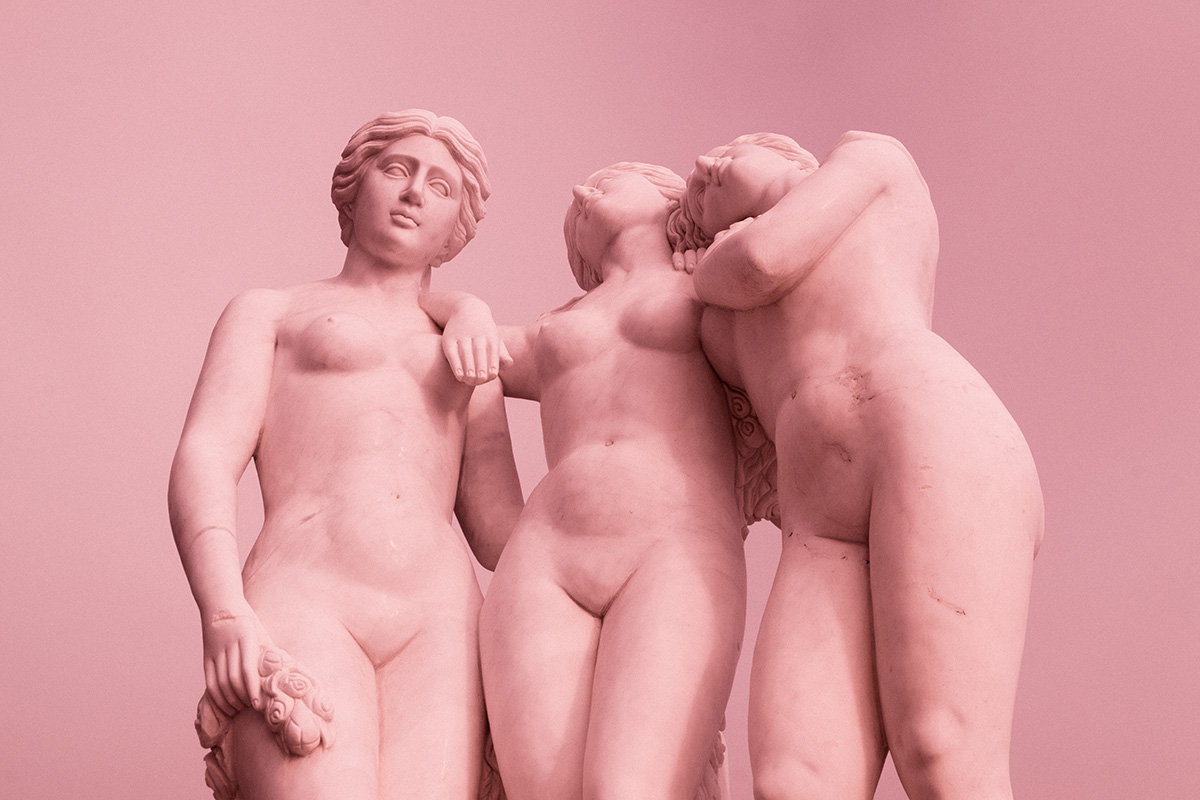
allyssa olaivar, “archetypes,” 2007
- People who play a single consistent role in life and are rewarded for it often embody a specific persona or archetype. Examples might include Adam Sandler (goofy or “Everyman” characters); Sean Connery (suave secret agent); Winston Churchill or Margaret Thatcher (strong leader archetype); Jimmy Carter or Bernie Sanders (the “Everyman” politician); Elvis (“King of Rock and Roll”); Lady Gaga (avant-garde, boundary-pushing pop star); Michael Jordan or Serena Williams as relentless or dominant champions. ↩︎


Leave a Reply